
How AI Adapts Tone for Different Audiences

AI is changing how businesses communicate by automatically adjusting tone to match audience preferences. Whether you're addressing venture capitalists or engaging on social media, tone matters - it builds trust, drives engagement, and ensures your message resonates. Traditionally, tailoring content for different audiences was time-consuming and prone to inconsistencies. AI now solves this by analyzing emotional cues, audience expectations, and platform norms to create tone-optimized content for every scenario.
Key takeaways:
- Why tone matters: It influences trust and engagement by aligning with audience expectations.
- How AI helps: Tools use sentiment analysis and natural language processing (NLP) to adjust tone for different platforms and demographics.
- Benefits for businesses: AI saves time, ensures consistency, and improves audience connections by tailoring tone automatically.
AI-powered tools like Pressmaster.ai make it easy to create, distribute, and fine-tune content for multiple channels, ensuring your communication feels natural and effective. These tools also track performance metrics to refine tone strategies over time.
AI tools for Style, Tone & Voice in Tech Writing [Part II] (Module 5: TECM 5190)
Main AI Techniques for Tone Adaptation
AI uses a variety of techniques to adjust tone effectively, ensuring content aligns with the intended audience and context.
Sentiment Analysis and Emotional Detection
Sentiment analysis is at the core of how AI adapts tone. It works by analyzing text - looking at word choice, punctuation, and sentence structure - to detect emotions like joy, frustration, or neutrality. For instance, AI can take a statement like "We need to discuss this issue immediately" and reframe it as either a friendly "Let's schedule a quick chat about this" or a firm "This requires immediate attention", depending on the desired tone.
Natural language processing (NLP) algorithms take this further by interpreting context. A phrase like "This is fine" might seem neutral, but with additional context, it could reveal sarcasm or resignation. By understanding these nuances, AI can adjust tone to match the situation. Companies have found that tailoring tone to audience preferences can significantly impact engagement. For example, conversational tones tend to resonate more with younger audiences, boosting click-through rates, while formal tones are often better suited for business communications [2].
AI doesn’t stop at emotion detection - it also considers the broader context and audience needs.
Context-Based and Audience-Specific Changes
AI adapts tone based on context, factoring in elements like demographics, cultural preferences, and platform norms. For example, a cheerful, casual tone may work well for social media aimed at young adults, while corporate emails might call for a more formal and professional approach.
Cultural awareness is critical when creating content for global audiences. Many AI tools now support over 80 languages, offering real-time adjustments to account for cultural differences [4]. For instance, some cultures prefer direct communication, while others lean toward more indirect styles. AI can respect these preferences, ensuring content feels appropriate and relatable. Similarly, platform-specific norms are taken into account, allowing tone to shift based on whether the content is for a social media post, a blog, or an email campaign.
Voice Adjustment and Personalization
AI doesn't just modify text - it personalizes voice delivery to create a deeper connection. Modern AI voice generators can adjust pitch, speed, accent, and even emotional inflection to produce audio content that feels natural and tailored. This allows for specific adjustments, such as creating an enthusiastic voice for a product demo or a calm, authoritative tone for a financial report [2].
Some tools, like Pressmaster.ai, take personalization to the next level. They learn a user’s unique voice, beliefs, and style through AI-driven interviews. Thomas Preiss, a Sales Development Coach, shared his experience:
"Once your brand voice is in there it's amazing how close each article gets to the way I would write. Then the ai interviews are amazing. Like a real person is grilling me on my points. Love it!" [1]
This goes beyond just matching tone - it captures the essence of how someone communicates. Stephen Meadows, COO at Coldwell Banker Premier, praised this capability:
"It's one of the easiest programs for AI content creation. It captured my voice and tone amazingly well." [1]
AI can even adjust tone dynamically based on real-time audience feedback. If data shows that a casual tone drives higher engagement for a specific group, the AI can adapt future content accordingly. This combination of personalization and adaptability helps organizations maintain a consistent voice while tailoring their message to different audiences. By doing so, brands can ensure their content remains relatable, impactful, and true to their identity.
How to Add AI Tone Adaptation to PR Workflows
Incorporating AI-powered tone adaptation into your PR strategy doesn’t have to be complicated. By following a structured approach, you can fine-tune your communication to resonate with different audiences while staying true to your brand's identity. Here’s how to make it work.
Step 1: Identify Your Audience Groups
Start by breaking down your audience into distinct groups based on demographics and psychographics. Factors like age, location, profession, and income shape how people prefer to receive information. For instance, a tech startup appealing to millennials in San Francisco will naturally use a different tone than a financial firm targeting corporate executives in New York.
Psychographics go deeper, exploring values, interests, and lifestyles. For example, you might find that younger audiences engage more with casual, conversational posts, while professionals lean toward formal language in email campaigns. This insight helps you pinpoint specific tone preferences.
Platform behavior matters, too. Someone might expect a relaxed, emoji-filled message on Instagram but prefer concise, professional communication on LinkedIn. AI tools can track these platform-specific interactions, ensuring your tone aligns with audience expectations across channels.
Once you’ve gathered these insights, formalize them into detailed brand voice profiles.
Step 2: Build Brand Voice Profiles
Developing strong brand voice profiles ensures your AI-generated content stays consistent while adapting to different audiences. Start by analyzing your existing content to identify the tone and style that define your brand's personality.
AI tools can scan past content to uncover tone patterns, laying the groundwork for creating brand voice guidelines. These guidelines can then be integrated into AI content creation tools, ensuring that every piece of content reflects your brand’s voice.
Some platforms, like Pressmaster.ai, take this a step further by using advanced interview techniques to capture unique expertise and authentic speaking styles from your team members. This allows the AI to replicate your brand’s voice more accurately, making the content feel genuine.
Clear brand guidelines are essential. They should define how your tone shifts across different contexts - perhaps formal for press releases and conversational for social media - while maintaining the core elements that make your brand recognizable.
To speed up the AI's learning, provide sample content that aligns with your brand voice. High-performing blog posts, well-received press releases, or engaging social media updates can serve as excellent examples.
With your voice profiles in place, you can use analytics to fine-tune your tone adaptations as you go.
Step 3: Use Feedback and Analytics for Improvement
AI tone adaptation thrives on continuous learning. By monitoring engagement metrics - like click-through rates, shares, comments, and time spent reading - you can see which tones resonate best with each audience segment.
For example, you might discover that using an empathetic tone during a crisis generates more positive responses, or that an enthusiastic tone drives higher conversions during a product launch. These insights allow you to fine-tune your strategy over time.
Real-time adjustments can take this further. Some AI tools can tweak tone on the fly based on immediate audience feedback, creating a feedback loop that makes your communication more effective with each interaction.
A SaaS company applied this approach by using AI to adapt customer support emails for different user segments, such as enterprise clients versus small business customers. Over six months, they saw an 18% improvement in customer satisfaction scores and a 30% reduction in response times [5].
Additionally, A/B testing can help you experiment with different tones to determine what works best for each audience. While AI handles much of the automation, human oversight remains crucial. Editors can catch subtle nuances and cultural sensitivities that algorithms might miss, ensuring your content feels authentic and emotionally intelligent.
| Workflow Step | Key Activities | Success Metrics |
|---|---|---|
| Audience Identification | Demographic and psychographic profiling, platform tracking | Engagement rates, audience growth |
| Brand Voice Building | Content analysis, voice profile creation, guideline setting | Brand consistency, voice authenticity |
| Feedback Integration | Performance monitoring, sentiment tracking, real-time adjustments | Improved engagement, satisfaction scores, conversion rates |
Pressmaster.ai: AI-Powered PR Tone Management in Action
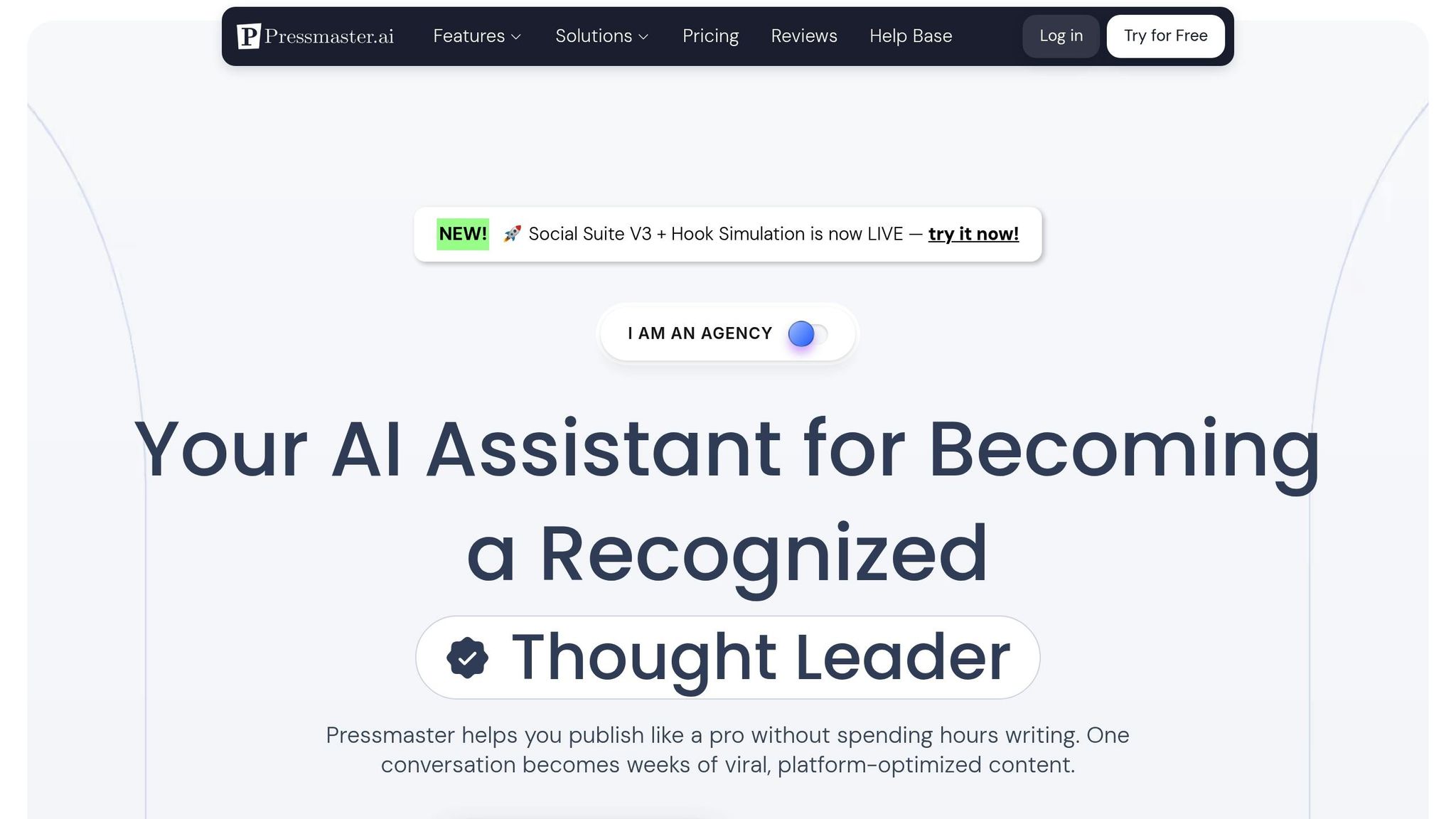
Pressmaster.ai takes the guesswork out of tone adaptation with its advanced AI tools and seamless PR workflows. It’s not just about creating content - it’s about managing tone in a way that resonates with diverse audiences while staying true to your brand’s voice. By integrating AI-driven features into established PR processes, it bridges innovation with practical execution.
AI Content Creation and Multi-Channel Distribution
Pressmaster.ai’s content creation system is designed to sound like you. By analyzing sample texts and conducting interviews, the platform learns your unique voice and creates authentic articles, press releases, and thought leadership pieces. Its Brand Voice Training feature goes a step further, studying your website and sample content to establish clear tone guidelines. This ensures every piece reflects your desired emotional tone, no matter the context.
Once the content is ready, the platform handles multi-channel distribution effortlessly. It automatically publishes to press networks, social media platforms, and custom newsrooms - all while maintaining tone consistency. This automation removes the need for manual adjustments, saving time and effort.
But it doesn’t stop there. The Hook Engineering & Performance Simulation feature allows you to predict audience reactions before hitting publish. By simulating emotional responses and engagement triggers, you can fine-tune your content’s tone to connect with specific audience segments. This solves a common challenge: ensuring tone consistency across platforms without losing impact.
For social media, Pressmaster.ai’s Social Suite transforms a single article into over 15 platform-optimized posts. Each post is tailored to match the audience expectations and engagement patterns of different platforms, ensuring your message resonates wherever it’s shared.
Trend Analysis and Emotional Calibration
Pressmaster.ai doesn’t just create content - it helps you stay ahead of the curve. Its Trendmaster feature scans 500,000 sources daily to identify emerging trends, allowing you to align your content’s tone with what’s currently capturing attention. Whether it’s industry conversations, news cycles, or social media buzz, this real-time trend monitoring ensures your tone stays relevant.
The platform also adjusts emotional tone dynamically. For instance, it can adopt a more empathetic tone during sensitive events or a persuasive tone when promoting new products. The AI Strategizer, trained on over a million viral articles and proven frameworks, provides content angles designed to engage your audience effectively. This proactive tone adjustment ensures your messaging hits the right note every time.
Customer Success Stories
The impact of Pressmaster.ai is best seen through the success of its users. Take Wesley Pitts, a founder who saw a dramatic boost in engagement after using the platform:
"My first posts with Pressmaster were incredible. 10,643% increase in post impressions and 24% increase in followers in less than a week. Amazing results!" - Wesley Pitts, Founder [1]
Adrian Zaldivar, Founder at Z&S Consulting, also achieved impressive results. By incorporating tone-optimized content through the platform’s Newsroom feature, he significantly improved his agency’s sales performance:
"After using Pressmaster for about 3 months and sending my Newsroom as part of my sales process for my agency, we went from an 8% close rate to 21% with cold email leads. People on our sales calls give us props for doing this and say it's very professional." - Adrian Zaldivar, Founder at Z&S Consulting [1]
Another standout feature is the External Interview tool, which helps businesses transform raw insights from team members into polished, professional content. This allows companies to scale thought leadership efforts while preserving the authentic voice of their speakers - a game-changer for maintaining credibility and uniqueness in communication.
Best Practices for Effective AI Tone Management
Building on the steps of audience segmentation and voice profiling, these best practices help fine-tune your AI tone strategy. Managing AI tone isn’t a one-and-done task - it’s an ongoing process that evolves alongside your audience and market dynamics. The most successful brands treat tone management as a system that grows and adapts over time.
Keep Brand Voice Guidelines Current
Your brand voice should evolve with your audience and market trends. Regular updates to your brand voice guidelines ensure that AI-generated content remains in sync with shifting audience expectations, trends, and market conditions. This prevents your tone from feeling outdated or out of touch [3][5].
Here’s a key takeaway:
"The paradox is beautiful: As machines get better at helping us express ideas, having something original to express becomes more important." [1]
This highlights the importance of focusing on what makes your brand stand out. While AI can amplify your message, it can’t replicate your unique experiences, insights, or perspective.
To keep your brand guidelines relevant, start by reviewing recent audience feedback and consulting with your teams to spot changes in audience preferences. Pay attention to emerging language trends, make adjustments for inclusivity, and document tone preferences for different platforms - use a formal tone for press releases and a conversational one for social media [2][5]. Experts recommend revisiting your guidelines quarterly or after major shifts in your brand or audience [3][5].
These updates lay the groundwork for real-time tone adjustments.
Use Real-Time Analytics to Adjust Tone
Data - not guesswork - should guide your tone decisions. Real-time analytics can track metrics like click-through rates, time spent on a page, and audience sentiment. By integrating these analytics with your AI platform, you can automatically adjust tone parameters - such as formality, humor, or emotional intensity - based on what resonates with specific audience segments [2][5][7].
This approach delivers results. For example, one retail brand used AI to craft upbeat, casual social media posts for Gen Z audiences, boosting shares and comments by 30%. The same brand adopted a formal, authoritative tone for investor communications, enhancing credibility and trust [2][6].
To refine tone accuracy, establish feedback loops by monitoring social media activity, conducting audience surveys, and analyzing sentiment data. For instance, if analytics show that empathetic tones in customer service emails improve engagement, your AI can prioritize that style moving forward [2][5][7].
Focus on key metrics like engagement rates, sentiment scores, conversion rates, and audience retention. Set benchmarks for each audience segment and platform, then use analytics dashboards to track progress and connect results to tone adjustments [2][5].
Consider Regional and Local Differences
Effective AI tone management goes beyond language - it must also reflect local norms and conventions. Configure your AI to handle US-specific formats, such as MM/DD/YYYY dates, dollar currency, American spelling, and imperial units [4][5].
Beyond formatting, tone should align with regional nuances. For example, a direct communication style might work well in certain business settings but could feel too blunt elsewhere. AI tools trained with localized datasets can help capture these subtleties [4][5]. What feels professional in New York might come off as too aggressive in the Midwest, while a tone that works in California may seem too casual for East Coast audiences.
The benefits are clear. Businesses using AI tools for multilingual and multicultural communication report up to 66% productivity gains and save as much as 85 hours per month on communication tasks [4]. This efficiency comes from getting the tone right the first time, reducing the need for constant revisions.
Common pitfalls include using the same tone across all channels, failing to update brand guidelines, and ignoring regional or cultural differences. These issues can be avoided by segmenting audiences, reviewing tone effectiveness regularly, and using AI tools designed for multi-tone adaptation [2][3][5]. Collaboration between PR, marketing, and customer service teams ensures consistent messaging while respecting regional nuances [5][6].
Incorporating local nuances into your AI strategy helps maintain global consistency while ensuring relevance at the regional level.
Conclusion: The Future of AI Tone Adaptation
AI tone adaptation is reshaping how businesses engage with their audiences. Companies leveraging this technology for multilingual communication have already reported productivity boosts of 66% [4]. However, the real game-changer isn’t just about efficiency - it’s about forging deeper connections with diverse audience groups.
The future of AI tone adaptation lies in amplifying human authenticity rather than replacing it. As these tools grow more advanced, they are evolving into collaborative partners, helping businesses express their unique perspectives across various platforms. Experts describe this shift as an "authenticity premium", where genuine expertise, personal experiences, and human judgment hold increasing value [1]. This transformation doesn’t just streamline processes - it opens the door for richer creative expression.
AI technology is set to handle tasks like adjusting formality, interpreting nuanced cultural contexts, and calibrating emotional tone. By taking care of these complexities, it frees up human teams to focus on generating fresh ideas and refining brand identity.
One exciting development on the horizon is advanced emotional detection. Future AI systems will simulate audience reactions, identify emotional triggers, and predict engagement patterns before content is even published. This capability will allow businesses to fine-tune their messaging with an unmatched level of precision [1].
Real-time personalization across multiple channels is also becoming more sophisticated. AI is learning to adapt tone seamlessly for different demographics - whether it’s crafting a casual, relatable style for Gen Z on social media or maintaining a professional tone for B2B communications [2][5]. This real-time adaptability paves the way for even more refined, region-specific adjustments.
Regional and cultural nuances will also be addressed with greater accuracy. For example, AI tools will automatically apply U.S.-specific formatting and account for subtle regional communication preferences [4][5].
Rather than replacing human creativity, these advancements emphasize collaboration. AI will increasingly act as a thought partner, enabling businesses to combine technology with human insight. The focus will shift toward creating unique frameworks, connecting diverse ideas, and developing perspectives that AI can help refine and distribute across platforms [1].
Platforms like Pressmaster.ai are already showcasing this future by offering AI-driven PR solutions. These tools manage everything from content creation and multi-channel distribution to trend analysis and performance tracking - all while preserving a brand's authentic voice for varied audience segments.
The businesses that excel in this AI-powered landscape will be those that embrace their individuality. Instead of using AI to sound generic, they’ll leverage it to amplify their distinct voice, ensuring that authenticity resonates with every audience. By blending AI’s precision with the depth of human expertise, brands can deliver communications that are both accurate and meaningful.
FAQs
How does AI adjust its tone for platforms like social media versus formal emails?
AI fine-tunes its tone by considering the specific needs and expectations of different platforms. For instance, social media typically demands a friendly and conversational style, while formal emails call for a more professional and refined tone.
By taking into account factors such as audience preferences, platform standards, and the goals of the communication, AI ensures that the tone matches the purpose. This makes the content more effective - whether it's fostering engagement on social media or upholding professionalism in business interactions.
How does AI adjust content tone to suit different cultural audiences?
AI leverages advanced language models to tailor content tone to fit cultural subtleties, audience preferences, and platform-specific needs. For instance, it can produce polished, professional language for corporate communications or adopt a relaxed, conversational vibe for social media platforms.
By examining linguistic trends, regional expressions, and cultural habits, AI ensures the content resonates with its intended audience. This approach allows businesses to engage more meaningfully with different groups, fostering stronger connections and trust across various channels.
How can businesses make sure AI-generated content reflects their brand's voice and values?
Pressmaster.ai helps maintain your brand's identity by understanding and adapting to your specific tone, style, and core values. It customizes every piece of content to match your messaging, ensuring it aligns seamlessly with your voice.
With this approach, you can rely on AI-generated content to engage your audience while keeping the personal touch that makes your brand stand out.
Related Blog Posts








Sign Up for our Pressmaster Newsletter
Sign up for our Pressmaster.ai newsletter to get instant alerts on trending topics, ensuring you stay ahead in your field with the latest insights and updates.


.avif)
.png)

.avif)


7 Viral Patterns That Drove 10,643% Growth
Turn natural conversations into content gold, make every insight count, and drive real conversations.

Please fill out the form to get our Viral Cheat Sheet


How to Become a Thought Leader in 6 Easy Steps
Increase your visibility, establish authority, and conquer your market with minimal effort.

Please fill out the form to get our PDF Checklist
